
Private Membership Association



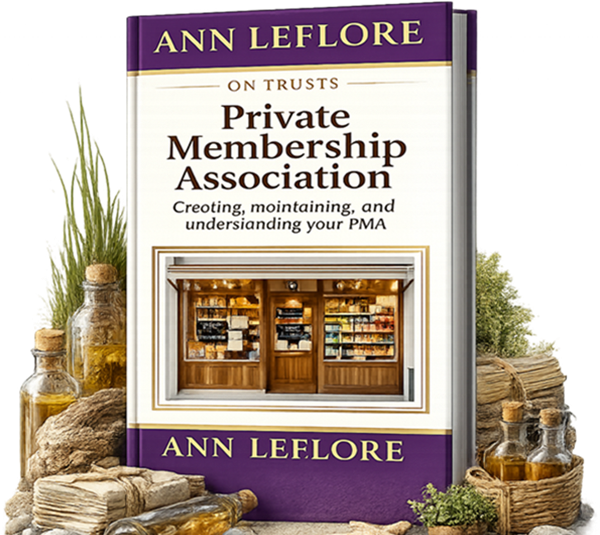
Private Membership Association
Build, Protect, and Operate Your Business in the Private with Structure, Compliance, and Confidence
by Ann LeFlore
Take control of your business, organization, or professional community with a practical legal guide designed to help you create, structure, and operate a lawful Private Membership Association (PMA) with clarity, privacy, and operational integrity.
This book introduces the real constitutional foundations, contractual frameworks, governance systems, compliance structures, financial realities, and legal safeguards behind PMAs—showing readers how to properly build private associations for lawful member-based activities while avoiding the misinformation, myths, and structural mistakes that can lead to legal exposure.
Whether your goal is creating a private business network, educational association, wellness group, professional guild, family enterprise, or member-based organization, Ann LeFlore provides a structured foundation for building and maintaining a PMA that protects privacy, strengthens governance, supports compliance, and operates lawfully within real-world legal frameworks.
eBook: $49.95
What will you learn?
This guide gives readers a deeper look at how Private Membership Associations (PMAs) are lawfully created, structured, governed, and maintained within real constitutional, contractual, and regulatory frameworks. It explains the legal foundations of private association, governance systems, financial realities, compliance obligations, membership structures, operational safeguards, and the critical distinction between lawful PMAs and pseudo-legal myths.
- What a Private Membership Association (PMA) is and how it actually works
- The true constitutional and contractual foundations of PMAs
- How freedom of association and private contract law support lawful PMA structures
- The difference between lawful private governance and false claims of legal immunity
- Why PMAs operate within the law—not outside of it
- Common myths about PMAs and why misinformation creates legal risk
- How to determine whether a PMA is appropriate for your business, mission, or organization
- The difference between nonprofit, mutual benefit, unincorporated, and other PMA structures
- How to define lawful purpose, scope, and mission for a PMA
- How to create Articles of Association, Bylaws, Membership Agreements, and governing documents
- How PMA membership contracts establish rights, obligations, privacy, and internal standards
- How trustee boards, directors, officers, and governance systems function inside a PMA
- How fiduciary duties, ethical governance, and accountability strengthen legal legitimacy
- How PMAs handle member admissions, dues, terminations, voting, and internal operations
- How internal arbitration, mediation, and dispute resolution systems work
- How PMAs maintain privacy, confidentiality, and recordkeeping systems
- How PMAs manage banking, EINs, financial records, accounting, and tax obligations
- Why “private” does not mean tax-free, regulation-free, or immune from public law
- How IRS classifications, nonprofit structures, and reporting obligations affect PMAs
- How PMAs can lawfully function in education, wellness, business, civic, and professional sectors
- How to avoid fraud, pseudo-legal claims, regulatory violations, and structural collapse
- How to create compliance systems, policies, insurance protections, and operational safeguards
- How to use templates, checklists, governance tools, membership systems, and legal frameworks to build a professional PMA
- How to protect privacy, strengthen member trust, and maintain long-term organizational legitimacy.
Book Description
Private Membership Association by Ann LeFlore is a comprehensive legal, operational, and governance guide for entrepreneurs, trustees, professionals, educators, wellness practitioners, families, and organizations seeking to lawfully create, structure, and manage Private Membership Associations (PMAs) with integrity and real-world compliance.
Designed as both an educational resource and practical implementation system, this book moves beyond internet myths and pseudo-legal theories to provide readers with a disciplined framework grounded in constitutional rights, contract law, nonprofit governance, operational structure, and lawful private enterprise. It explains what PMAs truly are, what they are not, and how they can be used responsibly for legitimate private education, professional associations, wellness communities, family enterprises, member-based businesses, and cooperative ventures.
Readers are guided through the constitutional foundations of freedom of association, private contract law, legal limitations, governance structures, membership systems, Articles of Association, Bylaws, financial systems, tax obligations, compliance requirements, fiduciary duties, dispute resolution, and operational safeguards. The book also addresses widespread misinformation surrounding PMAs, including false claims of tax immunity, regulatory avoidance, or jurisdictional exemption, replacing those misconceptions with practical legal clarity.
With extensive templates, checklists, governance documents, membership agreements, compliance systems, board frameworks, privacy tools, arbitration systems, and administrative procedures, Private Membership Association provides readers with the tools to build lawful organizations that balance privacy, autonomy, accountability, and long-term sustainability.
Whether your goal is launching a private business association, educational network, wellness cooperative, professional guild, family governance structure, or lawful member-based enterprise, Private Membership Association provides a structured roadmap for creating and maintaining a PMA that is private, professional, compliant, and built to endure.
Book Details
Title: Private Membership Association
Author: Ann LeFlore
Format: Digital Download / Educational Guide
Category: Private Membership Associations, Business Structure, Governance, Contract Law, Asset Protection, Legal Operations
Purpose: Educational and informational resource for understanding, creating, structuring, governing, and maintaining lawful Private Membership Associations (PMAs) through constitutional foundations, contract law, governance systems, compliance frameworks, financial management, and operational safeguards
Focus Areas: PMA formation, constitutional rights of association, private contract law, Articles of Association, Bylaws, membership agreements, governance systems, trustee and board structures, compliance obligations, financial and tax realities, privacy systems, arbitration, dispute resolution, fiduciary duties, nonprofit and mutual benefit structures, and lawful private enterprise
Includes: Comprehensive PMA formation frameworks, legal and governance analysis, Articles of Association templates, Bylaws templates, membership agreements, board governance tools, trustee frameworks, privacy and confidentiality systems, financial policies, tax compliance guidance, arbitration systems, operational checklists, state legal references, compliance templates, and practical PMA management resources
Ideal For: Entrepreneurs, business owners, educators, wellness practitioners, trustees, nonprofit founders, professional associations, family enterprises, legal researchers, community leaders, and individuals seeking stronger privacy, governance, lawful private business structure, and member-based operational control
Delivery: Instant access upon purchase (if digital product)
Usage: Personal educational use
Table of Contents
- Copyright Notice
- Preface
- Foreword
- Dedication
- Legal Disclaimer
- Introduction to Private Membership Associations
- Glossary of Terms
- The True Constitutional Foundations of Private Membership Associations
- Freedom of Association, Private Contract, and Legal Limits
- U.S., Canadian, and Civil Code Foundations
- Lawful Scope of Privacy and Internal Governance
- Common Myths and Misconceptions About PMAs
- Step-by-Step Legal and Governance Framework for a Professional Member Association (PMA)
- Defining Purpose, Scope, and Mission
- Choosing a Legal Structure
- Articles of Association and Organizational Foundations
- Drafting Bylaws and Membership Agreements
- Governance Systems and Board Structures
- Financial and Tax Compliance Foundations
- Compliance, Risk Management, and Ongoing Maintenance
- Understanding PMAs: Lawful Foundations and Operational Models
- PMA Types: Health, Education, Civic, Professional, and Business
- Lawful Operations vs. Pseudo-Legal Abuse
- Professional Governance Models
- Financial and Tax Realities of Private Membership Associations
- IRS Classifications and Organizational Structures
- Banking, EINs, Accounting, and Reporting
- Membership Dues, Contributions, and Revenue Models
- Tax Compliance and Financial Transparency
- Common Financial Pitfalls and Liability Risks
- Proven Strategies for Growth, Sustainability, and Adaptation
- Membership Recruitment and Retention
- Governance Expansion and Leadership Development
- Financial Sustainability and Revenue Planning
- Branding, Public Relations, and Legal Integrity
- Case Studies
- Private Membership Association (PMA) Formation Checklist
- All Legal Documents, Required Steps, and How to Do Each Correctly
- Building a Solid PMA Foundation: The Power of the Articles of Association
- The Heartbeat of a PMA: Crafting Effective Bylaws
- Administrative and Compliance Documents: The Lifeline of a Lawful PMA
- The Legal Test and Enforceability of a Private Membership Association
- Questions and Answers: Understanding the Private Membership Association (PMA)
- Private Membership Association Article of Association Template
- Preamble Declaration
- Article I: Creation
- Article II: Intent
- Article III: Governance & Records
- Article IV: Membership
- Article V: Governance
- Article VI: Liability and Indemnification
- Article VII: Finances
- Article VIII: Records and Privacy
- Article IX: Dissolution and Winding-Up
- Article X: Governing Law and Dispute Resolution
- Article XI: Amendment of Articles
- Article XII: Execution
- Bylaws Template
- Declaration of Private Status Template
- Statement of Purpose & Mission Template
- Confidentiality & Non-Disclosure Agreement (NDA)
- Board of Trustees / Directors Charter Template
- Trustee Oath & Confidentiality Statement Template
- Officer Job Descriptions Template
- Conflict of Interest Policy Template
- Fiscal Policy & Financial Management Procedures Template
- Donation & Contribution Policy Template
- Indemnity & Liability Waiver Template
- Privacy Policy Template
- Record Retention Schedule Template
- Hold Harmless Agreement Template
- Notice of Private Jurisdiction Template
- Digital Privacy & Communication Policy Template
- Emergency Succession Plan Template
- Dissolution Plan & Record Transfer Policy Template
- Private Membership Association Membership Agreement Template
- Notice of Private Membership Status Template
- Private Membership Association Arbitration Agreement Template
- Board Meeting Minutes Template
- Private Membership Register Template
- Membership Ledger Summary Sheet Template
- Private Ledger Index & Annual Certification Template
- Membership Application & Acceptance Form Template
- Board of Trustees Membership Approval Resolution Template
- Board Resolution Templates and Governance Logs
- Rules and Guidelines for the Board of Trustees in a PMA
- Member Code of Conduct and Guidelines
- Appendix A: Private Arbitration Rules and Procedures
- Appendix B: Notice of Arbitration
- Appendix C: Arbitrator Confidentiality and Impartiality Statement
- Appendix D: Arbitration Award Template
- Appendix E: Certificate of Service of Arbitration Award
- Appendix F: State Legal References for PMA
- Index
About the Author

eBook: $49.95
Ann LeFlore is an author and educational resource creator focused on trust organization, estate structure, and private trust frameworks. Through her work, she provides practical tools, instructional materials, and trust-based educational resources designed to help individuals and families better understand the process of creating, funding, organizing, and managing trust structures with greater clarity.
Her work emphasizes accessible trust education, structured planning, and practical guidance, offering readers step-by-step resources, templates, and organizational frameworks intended to simplify complex trust concepts. Through her books and educational materials, Ann LeFlore’s mission is to help readers move forward with greater confidence, organization, and understanding in their trust planning journey.