
Introduction to Trusts




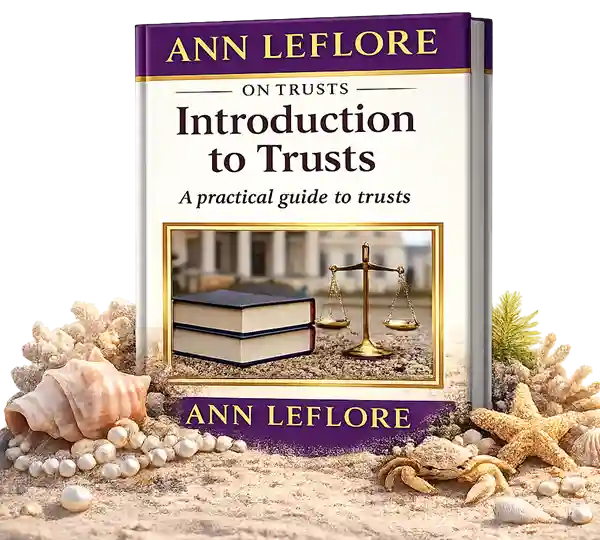
Introduction to Trusts
Building the Foundation for Lasting Wealth Protection
A Beginner’s Guide to Trust Planning
by Ann LeFlore
Build a genuine working understanding of trust law from the ground up with a foundational guide designed to take readers from first principles to practical application, without requiring any prior legal background.
This book introduces the doctrinal architecture of trusts—their essential elements, their grounding in fiduciary duty and equity, and the historical development that shaped modern trust practice—before advancing into trust creation, fiduciary governance, termination, cross-border complexity, and enforcement in the courts.
Whether your goal is learning trust fundamentals, preparing to work with an attorney, building a professional refresher, or simply understanding the planning tools available to protect and transfer wealth, Introduction to Trusts offers a clear, progressively structured path to real comprehension—not just a list of definitions.
eBook: $49.95
What will you learn?
This guide walks readers through the doctrinal foundation, practical mechanics, and real-world application of trust law—from the legal architecture of a trust to how trusts are created, governed, challenged, and ultimately terminated.
- What a trust actually is, and how it differs from a will, contract, agency relationship, or legal entity
- How legal title and equitable ownership are divided—and why that division is the structural core of every trust
- The four essential elements required for a trust to exist under law
- How fiduciary duty attaches to a trustee, and why it cannot be waived or avoided by silence
- The historical origins of trust law, from medieval “uses” through the Statute of Uses to the modern trust
- Why trusts exist: probate avoidance, privacy, control, tax planning, asset protection, family governance, and charitable purposes
- How trusts are created, including manifestation of intent, funding, and formal legal requirements
- The difference between inter vivos, testamentary, and law-imposed trusts
- How trust instruments are drafted, interpreted, and can fail or be reclassified
- The core fiduciary duties of loyalty, prudence, impartiality, and accountability
- How trustee discretion is reviewed by courts, and what happens when a trustee breaches duty
- Remedies available to beneficiaries, including surcharge, tracing, and constructive trusts
- How and why trusts terminate—including beneficiary-controlled termination and the Claflin Doctrine
- What happens when a trustee becomes insolvent, hostile, or unable to serve
- How creditor claims, spendthrift protections, and insolvency intersect with trust property
- How trusts function within modern regulatory systems, taxation, and cross-border recognition
- How offshore and international trusts are treated and why jurisdiction matters
- The debate over dynasty trusts, perpetuities, and intergenerational wealth control
- How courts enforce trusts and the standing rules that determine who may sue
- The real functional limits of a trust—what a trust cannot do, and the most common misconceptions
- Why trusts remain, after centuries of legal development, one of the most important tools for managing property and intent over time
Book Description
Introduction to Trusts: Building the Foundation for Lasting Wealth Protection by Ann LeFlore is a foundational guide written for readers who need to understand trust law before they are asked to make decisions involving one—whether as clients, beneficiaries, trustees, or professionals just entering the field.
The book proceeds deliberately, building understanding in progressive stages. It begins with the doctrinal groundwork of trust law: the essential elements of a trust, the division between legal and equitable ownership, and the fiduciary duties that give the trust relationship its force. From there, it moves into the major reasons trusts are used, how trusts are formally created and funded, and how trustees are expected to govern trust property day to day. Later chapters address what happens when trusts break down—termination, insolvency, and disputes—before turning to how trusts function inside modern regulatory, tax, and cross-border systems, and how courts enforce trust obligations when something goes wrong.
Rather than presenting trust law as a list of definitions to memorize, this book is structured to explain why the rules take the shape they do. It draws on the equitable origins of trust law, tracing the concept from its roots in medieval property practice to its role in contemporary estate and wealth planning, while remaining grounded in practical, real-world application throughout.
This book does not replace jurisdiction-specific legal advice, nor does it attempt to catalog every variation of trust law across every jurisdiction. What it offers instead is a coherent framework—one that equips readers to engage more confidently with statutes, case law, and professional guidance as their own circumstances require. It is written for a broad readership: those encountering trusts for the first time, financial and fiduciary professionals seeking a structured refresher, and individuals who want to understand their planning options before engaging an attorney.
Book Details
Title: Introduction to Trusts: Building the Foundation for Lasting Wealth Protection
Author: Ann LeFlore
Format: Digital Download / Educational Guide
Category: Trust Education, Estate Planning, Fiduciary Law, Legal Reference
Purpose: A foundational, beginner-friendly introduction to trust law—covering trust structure, fiduciary duty, creation, administration, termination, and enforcement
Focus Areas: Trust formation, fiduciary governance, trust termination, creditor and insolvency intersection, cross-border and regulatory context, enforcement and remedies, common misconceptions
Includes: Glossary of trust and fiduciary law terms, a brief history of trust law, 8 core chapters, appendices (structural diagram, comparative doctrine table, trust lifecycle map), and index
Ideal For: Beginners, law students, fiduciary and financial professionals, trustees, grantors, beneficiaries, and individuals preparing to work with an estate planning attorney
Delivery: Instant access upon purchase (if digital product)
Usage: Personal educational use
Table of Contents
- Glossary of Trust and Fiduciary Law Terms
- A Brief History of Trust Law
- Chapter 1: The Nature, Structure, and Function of the Trust
- Chapter 2: Why Trusts Exist
- Chapter 3: How Trusts Are Created
- Chapter 4: Fiduciary Governance in Operation
- Chapter 5: Instability, Adaptation, and Termination of the Trust Regime
- Chapter 6: The Trust in Modern Legal Systems: Systemic Integration and Regulatory Interface
- Chapter 7: Enforcement and Remedial Architecture of the Trust
- Chapter 8: The Functional Limits and Misconceptions of the Trust
- Appendix A: Model Structural Diagram of a Trust
- Appendix B: Comparative Table — Trust vs. Adjacent Doctrines
- Appendix C: Lifecycle Map of a Trust
- Index
About the Author

eBook: $49.95
Ann LeFlore is an author and educational resource creator focused on trust organization, estate structure, and private trust frameworks. Through her work, she provides practical tools, instructional materials, and trust-based educational resources designed to help individuals and families better understand the process of creating, funding, organizing, and managing trust structures with greater clarity.
Her work emphasizes accessible trust education, structured planning, and practical guidance, offering readers step-by-step resources, templates, and organizational frameworks intended to simplify complex trust concepts. Through her books and educational materials, Ann LeFlore’s mission is to help readers move forward with greater confidence, organization, and understanding in their trust planning journey.