
Managing Your Trust



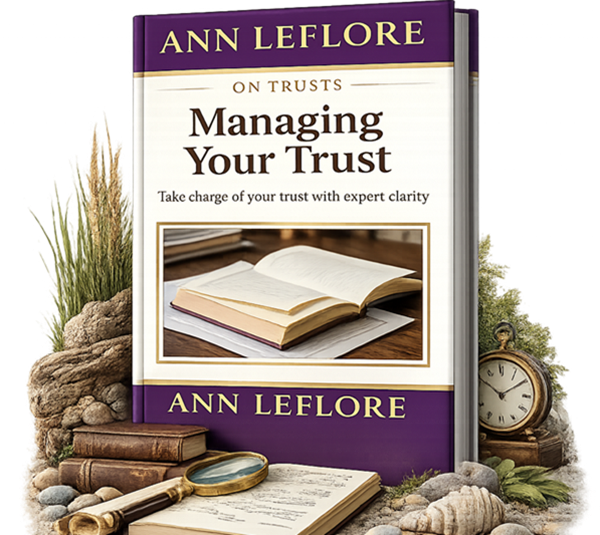



Managing Your Trust
Take Charge of Your Trust with Expert Clarity
ake control of your trust with a practical guide designed to help you properly manage, administer, and operate your trust with confidence, structure, and legal discipline.
This book introduces the real-world systems behind trust administration, including trustee duties, fiduciary standards, trust funding, banking, compliance, recordkeeping, asset control, and operational safeguards that determine whether a trust remains protected or becomes vulnerable.
Whether your goal is preserving trust integrity, protecting family wealth, avoiding costly mistakes, or learning how to run your trust like a professional, Ann LeFlore provides a structured foundation for maintaining a trust that is legally sound, operationally disciplined, and built to endure.
eBook: $49.95
What will you learn?
Managing Your Trust by Ann LeFlore is a comprehensive operational and fiduciary guide for trustees, grantors, families, and trust administrators who want to move beyond trust creation and learn how to properly run, protect, and preserve a trust over time.
Designed as both an educational resource and practical trust administration system, this book focuses on the critical reality that a trust’s true strength is determined not by how well it was drafted, but by how well it is operated. Readers are guided through the legal and practical systems required to establish fiduciary authority, maintain trust separateness, fund and control trust assets, manage records, administer distributions, uphold compliance, and preserve trust legitimacy under scrutiny from courts, regulators, financial institutions, and beneficiaries.
Beyond foundational theory, Managing Your Trust provides in-depth instruction on trustee duties, fiduciary law, trust banking, accounting systems, asset intake procedures, operational safeguards, trust succession, beneficiary rights, litigation risks, and the specific mistakes that can cause a trust to fail through piercing, sham trust doctrine, alter ego liability, or deficient administration. It also includes practical forms, trustee templates, compliance tools, procedural checklists, and administrative frameworks designed to help trustees operate with professional discipline.
Whether your goal is protecting family wealth, preserving trust integrity, avoiding fiduciary mistakes, strengthening legal defensibility, or learning how to administer a trust with clarity and confidence, Managing Your Trust provides a structured roadmap for turning a trust from a static legal document into a functioning, compliant, and resilient fiduciary institution.
Book Description
101 Trust Letters by Ann LeFlore is a comprehensive operational guide for trustees, grantors, co-trustees, successor trustees, and families who want to move beyond simply creating a trust and learn how to actually run one effectively.
Designed as both an educational resource and practical administrative toolkit, this book provides professionally structured trust letters, governance documents, banking authorizations, asset transfer tools, property management templates, trustee communications, beneficiary notices, dispute resolution systems, and operational frameworks that help transform a trust from a static legal document into a functioning management system.
Rather than focusing only on trust creation, 101 Trust Letters addresses the day-to-day realities of trust operation—banking, trustee transitions, property sales, leasing, trust funding, compliance, accounting, contract enforcement, beneficiary communications, and legal administration. Readers gain access to a wide range of customizable templates and procedural systems designed to simplify trust governance while strengthening organization, recordkeeping, and control.
Whether your goal is managing a revocable living trust, handling trust-owned property, protecting assets, coordinating trustee duties, improving trust administration, or operating your estate plan with greater precision, 101 Trust Letters provides a structured roadmap for managing trusts with practical clarity, professional documentation, and long-term administrative confidence.
Book Details
Title: Managing Your Trust
Author: Ann LeFlore
Format: Digital Download / Educational Guide
Category: Trust Administration, Fiduciary Management, Estate Planning, Trust Compliance, Legal Operations
Purpose: Educational and informational resource for understanding, operating, administering, and preserving trusts through proper fiduciary discipline, trustee governance, compliance systems, trust funding, operational safeguards, and long-term legal protection
Focus Areas: Trustee duties, fiduciary standards, trust administration, trust funding, banking systems, trust accounting, recordkeeping, beneficiary rights, trust compliance, fiduciary liability, trust litigation, sham trust prevention, operational safeguards, trustee succession, and legal trust preservation
Includes: Comprehensive trust administration frameworks, fiduciary governance systems, trustee onboarding procedures, trust funding protocols, banking and accounting systems, compliance calendars, operational safeguards, trustee templates, legal forms, beneficiary communication tools, litigation prevention systems, checklists, and practical trust management resources
Ideal For: Trustees, grantors, co-trustees, successor trustees, families, estate planners, property owners, financial managers, legal researchers, and individuals seeking stronger trust operation, fiduciary compliance, legal resilience, and long-term trust preservation
Delivery: Instant access upon purchase (if digital product)
Usage: Personal educational use
Table of Contents
- Copyright Notice
- Dedication
- Preface
- Foreword
- How to Use This Book
- Disclaimer
- Introduction
- Chapter 1: The Nature of Trust Operation and Fiduciary Identity
- What It Means to Operate a Trust
- The Trustee as Legal Owner with Equitable Constraints
- The Three Pillars Courts Examine to Determine Legitimate Operation
- The Consequence of Deficient Operation: Piercing, Sham Trust Doctrine, and Alter Ego Liability
- The Positive Definition: What Constitutes Proper Operation
- Best-Practice Operational Safeguards in Trust Administration
- Judicial Measurement of Control Versus Administration
- Chapter 2: Legal Duties of the Trustee
- Duty to Administer the Trust According to Its Terms
- Duty of Loyalty and Prohibition on Self-Dealing
- Duty of Prudence and the Modern Prudent Investor Standard
- Duty of Impartiality Among Beneficiaries
- Duty to Inform, Account, and Maintain Transparency
- Duty to Defend and Protect the Trust Corpus
- Duty to Segregate, Control, and Properly Title Trust Property
- Delegation, Co-Trustees, and Fiduciary Oversight
- Remedies for Breach of Fiduciary Duty
- Personal Liability, Limitations, and Defenses
- Chapter 3: Trustee Acceptance, Assumption of Office, and Onboarding
- Formal Acceptance of Trusteeship
- Identification, Segregation, and Assumption of Control of Trust Property
- Fiduciary Titling and Trustee Designation Standards
- Initial Trust Inventory and Baseline Valuation
- Authority to Act and Third-Party Reliance
- Certificate of Trust and Trustee Incumbency
- Banking Authority and Trust Account Establishment
- Trust Accounting Walkthrough and Recordkeeping Protocol
- Distribution Approval and Documentation Protocol
- Trustee Communications Protocol
- Trustee Transition, Resignation, and Successor Handoff
- Compliance Calendars and Administrative Infrastructure
- Chapter 4: Trustee Registration, Removal, and Succession
- Voluntary Trustee Resignation
- Trustee Removal and Judicial Displacement
- Successor Trustee Acceptance
- Transfer of Trust Property and Records
- Accounting at Transition
- Liability Allocation Between Trustees
- Temporary Trustees and Gaps in Administration
- Emergency Powers and Protective Administration
- Chapter 5: Trust Funding and Asset Intake Procedures
- Categories of Acceptable Trust Assets
- Mandatory Fiduciary Documentation
- Title Verification and Defective Transfer Prevention
- Formal Acceptance of Trust Property
- Segregation, Custody, and Fiduciary Control
- Funding Deficiencies and Corrective Remediation
- Trustee Authority to Refuse or Reverse Asset Acceptance
- Chapter 6: Fiduciary Decision-Making and Administrative Process
- Authority Verification
- Fiduciary Purpose and Beneficiary Alignment
- Risk Identification and Management
- Contemporaneous Documentation
- Monitoring and Oversight
- Reliance on Advisors
- Consistency, Record Integrity, and Evidentiary Standards
- Chapter 7: Equitable Remedies for Breach of Trust
- Personal Surcharge and Restitution
- Trustee Removal
- Rescission and Reversal of Improper Transactions
- Injunctive Relief
- Attorneys’ Fees and Costs
- Constructive Trusts, Equitable Liens, and Voidance
- Chapter 8: Fiduciary Duties of the Trustee
- Loyalty
- Impartiality
- Prudence
- Independent Judgment
- Informing and Accounting
- Asset Safeguarding
- Enforcement of Trust Claims
- Chapter 9: Breach of Fiduciary Duty
- Breach of Loyalty
- Breach of Prudence
- Breach of Impartiality
- Breach of Accounting Duties
- Breach of Asset Protection Duties
- Causation and Fiduciary Remedies
- Chapter 10: Trustee Liability and Personal Exposure
- Personal Liability
- Loss of Indemnification
- Forfeiture of Compensation
- Joint Trustee Liability
- Bankruptcy and Insolvency Exposure
- Statutes of Limitation
- Chapter 11: Litigation Against Trustees
- Standing to Sue
- Accounting Actions
- Removal Proceedings
- Judicial Supervision
- Litigation Costs and Finality
- Chapter 12: Invalid, Illusory, and Disregarded Trusts
- Commingling and Collapse of Separateness
- Alter Ego and Nominee Theory
- Failure to Observe Fiduciary Formalities
- Fraudulent Transfer and Illicit Purpose
- Sham Administration
- Judicial Recharacterization
- Chapter 13: Consequences of Trust Failure
- Creditor Access
- Tax Recharacterization
- Divorce and Family Law Exposure
- Civil, Criminal, and Regulatory Consequences
- Reputational Harm and Irreversibility
- Chapter 14: Structural Discipline and Preservation of Fiduciary Form
- Fiduciary Independence
- Segregation of Trust Property
- Recordkeeping Discipline
- Arm’s-Length Administration
- Defensive Administration
- Institutional Safeguards
- Chapter 15: Final Allocation of Risk and Responsibility in Trust Law
- Fiduciary Power and Responsibility
- Delegation Limits
- Exculpatory Clauses
- Indemnification Limits
- Resignation and Accountability
- Finality of Fiduciary Burden
- Appendix: Practical Trustee Forms and Templates
- Trustee Acceptance of Appointment
- Trustee Resolution Templates
- Distribution Authorization Forms
- Expense Reimbursement Forms
- Annual Accounting Templates
- Beneficiary Notice Templates
- Trustee Authority Certificates
- Record Retention Certifications
- Trustee Resignation and Succession Certificates
- Notice of Trust Administration
- Index
About the Author

eBook: $49.95
Ann LeFlore is an author and educational resource creator focused on trust organization, estate structure, and private trust frameworks. Through her work, she provides practical tools, instructional materials, and trust-based educational resources designed to help individuals and families better understand the process of creating, funding, organizing, and managing trust structures with greater clarity.
Her work emphasizes accessible trust education, structured planning, and practical guidance, offering readers step-by-step resources, templates, and organizational frameworks intended to simplify complex trust concepts. Through her books and educational materials, Ann LeFlore’s mission is to help readers move forward with greater confidence, organization, and understanding in their trust planning journey.