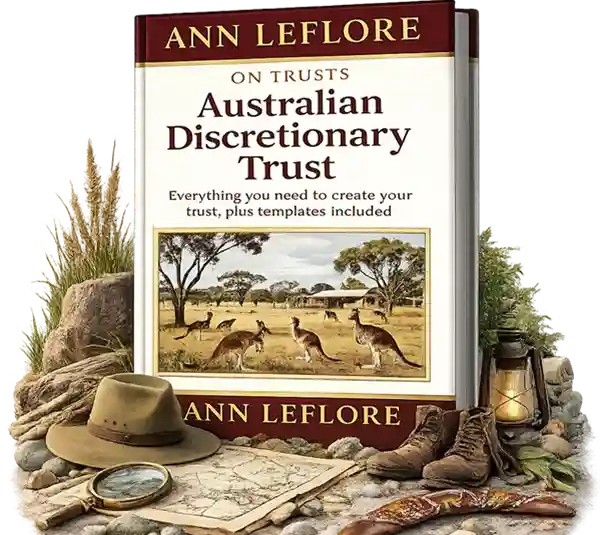
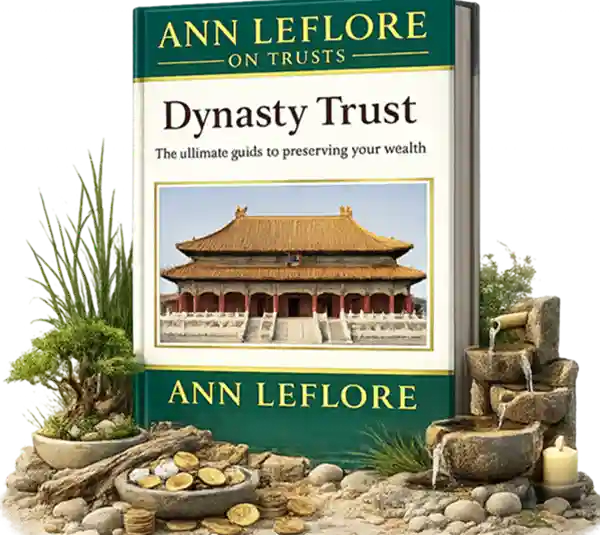
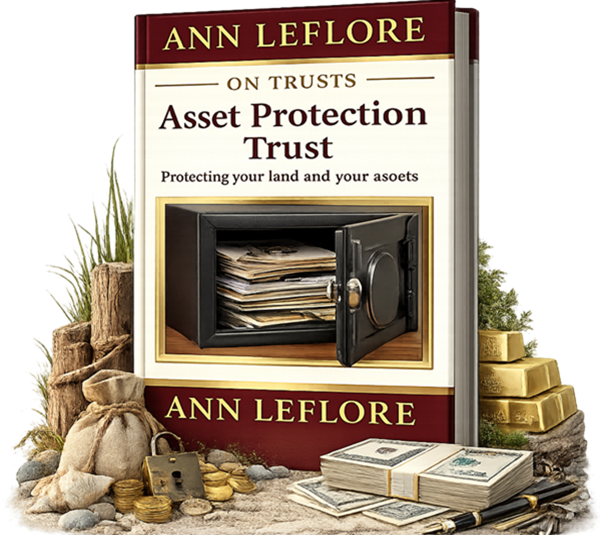
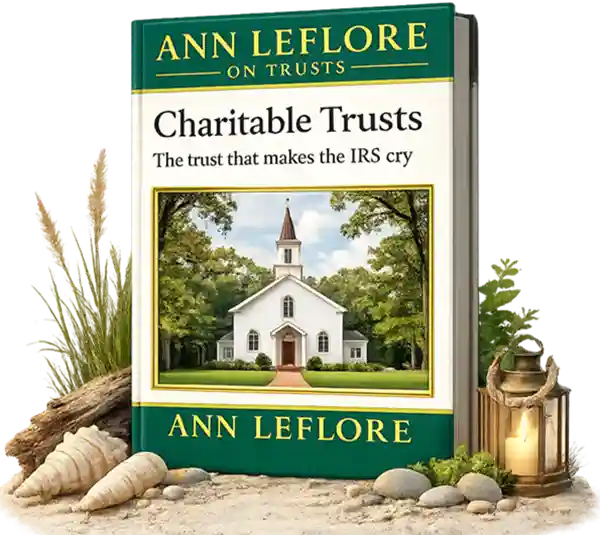
Clear guidance for understanding trusts, protecting assets, and planning for future generations.
Most Popular Trust Guides
By Ann LeFlore, Trust Author and Researcher
Understanding Trusts With Confidence
Clear, practical education on trusts, trustee duties, trust administration, and protecting family assets.
- Learn how trusts work
- Understand trustee responsibilities
- Explore real stratagies
Start Here to Learn About Trusts
Start with the fundamentals and gain a clear understanding of how trusts work, how they are used, and the responsibilities involved.
A trust is a legal structure used to hold and manage assets for the benefit of others. It defines how property is controlled, protected, and distributed.
A trust is created by a grantor who transfers assets into the trust. The Trustee then manages those assets which are later distributed to the beneficiaries according to the trust agreement.
A revocable trust can be changed or canceled during your lifetime. An irrevocable trust generally cannot be changed once created and may offer stronger asset protection.
.A trustee manages trust assets responsibly and follows the terms of the trust. They protect beneficiaries’ interests and carry out the trust as intended.
Clear Trust Guidance
Why Trusts Matter
Trusts can help you manage property, protect family interests, maintain privacy, and plan for the future.
Decide how assets are managed and distributed.
Help safeguard property for the people you choose.
Keep family and financial matters more private.
Prepare for incapacity, succession, and future needs.
Why People Use Trusts
People use trusts to protect assets, avoid delays, plan for incapacity, and control how property is handled over time.
Real-World Trust Uses
How trusts are used in real life
01 Avoid Probate
One of the most common reasons people establish a trust is to help avoid the probate process. Probate is the court-supervised procedure used to settle a person’s estate after death. During probate, the court may oversee the identification of assets, payment of debts, validation of documents, and distribution of property to heirs or beneficiaries. Depending on the size and complexity of the estate, probate can take months or even years to complete.
When assets are properly transferred into a trust, they are generally administered according to the terms of the trust rather than through the probate process. This allows a successor trustee to step in and manage or distribute trust assets according to the instructions established by the trust creator. Because the trust already owns the assets, there is often less need for court involvement in transferring ownership.
Many individuals choose trusts because they want to simplify matters for their families. Probate can involve legal filings, court deadlines, administrative requirements, and expenses that may create additional stress during an already difficult time. A properly funded trust can provide a more efficient framework for managing and distributing assets while reducing administrative burdens on loved ones.
Privacy is another important consideration. Probate proceedings are often part of the public record, meaning certain information about an estate may become publicly accessible. Trust administration is generally handled privately according to the terms of the trust document, allowing personal and financial matters to remain more confidential.
Avoiding probate does not eliminate the responsibilities associated with trust administration. Trustees must still identify trust assets, maintain records, communicate with beneficiaries, and carry out their fiduciary duties. However, many people find that administering a trust is often more flexible and efficient than navigating a lengthy court-supervised probate proceeding.
For many families, probate avoidance is not simply about saving time. It is about creating a plan that allows assets to be managed and transferred according to clear instructions while minimizing delays, preserving privacy, and reducing unnecessary complications. For that reason, avoiding probate remains one of the most frequently cited benefits of creating and maintaining a trust.
02 Protect Family Assets
Trusts are often used to help protect and preserve assets for the benefit of family members. While every family’s circumstances are different, many individuals create trusts because they want to provide structure, guidance, and oversight regarding how assets will be managed and distributed in the future.
Without a trust, assets may pass directly to beneficiaries, who then become fully responsible for managing those assets. In some situations, this may work well. In others, family members may be inexperienced with financial matters, face unexpected life challenges, or simply benefit from having additional safeguards in place. A trust can establish instructions that guide how and when assets are distributed, helping ensure that property is managed according to the wishes of the trust creator.
Trusts can also help provide long-term support for spouses, children, grandchildren, and other loved ones. Rather than distributing assets all at once, a trust may allow funds to be managed over time and used for specific purposes such as education, healthcare, housing, or other family needs. This flexibility allows trust creators to tailor their plans to their family’s unique circumstances and goals.
Another benefit of a trust is continuity. If circumstances change, the trustee can continue managing trust assets according to the trust terms while maintaining oversight and accountability. This can be particularly valuable when assets are intended to benefit multiple generations or when long-term planning is an important consideration.
Many people view a trust as more than a legal document. It is often a tool for protecting what has been built over a lifetime and providing guidance for future generations. By establishing clear instructions and creating a structured plan for asset management, a trust can help reduce uncertainty and provide greater confidence that family assets will be managed according to the trust creator’s intentions.
For these reasons, protecting family assets remains one of the most common motivations for creating a trust. Whether the goal is preserving property, supporting loved ones, or creating a lasting family legacy, trusts can play an important role in helping families plan for the future.
03 Control Distributions
One of the unique advantages of a trust is the ability to control how and when assets are distributed to beneficiaries. Rather than transferring assets outright, a trust allows the creator to establish specific instructions that guide future distributions according to personal goals, family circumstances, and long-term planning objectives.
Without a trust, beneficiaries may receive assets directly and gain immediate control over them. While this may be appropriate in some situations, many individuals prefer to create a structured plan that provides guidance and oversight regarding the use and distribution of family assets. A trust can help ensure that assets are distributed according to clearly defined instructions rather than being transferred without conditions or long-term planning considerations.
Trusts may provide for distributions at specific ages, over a period of years, or upon the occurrence of certain events such as completing an education, purchasing a home, starting a business, or reaching other milestones established by the trust creator. Some trusts also allow trustees to exercise discretion when making distributions based on the needs and circumstances of beneficiaries.
This flexibility can be particularly valuable when planning for younger beneficiaries or when the trust creator wants to provide long-term support while maintaining a degree of oversight. Rather than viewing distributions as a single event, a trust can create a framework that allows assets to be managed and distributed in a thoughtful and deliberate manner.
Trust distribution provisions can also help address changing circumstances over time. Life events, financial needs, educational goals, health concerns, and family dynamics may evolve, and a properly structured trust can provide guidance for managing those situations while remaining consistent with the trust creator’s intentions.
For many families, controlling distributions is not about restricting beneficiaries. It is about providing a clear plan for how assets will be used to support future generations. By establishing specific instructions and creating a structured approach to asset management, trusts can help balance flexibility, protection, and long-term stewardship.
As a result, the ability to control distributions remains one of the most significant reasons people choose to create trusts. It allows individuals to extend their planning beyond the initial transfer of assets and create a lasting framework that reflects their values, priorities, and goals for the future.

04 Plan for Incapacity
Many people associate trusts with estate planning, but trusts can also play an important role during a person’s lifetime. One of the most practical reasons for creating a trust is to prepare for the possibility of incapacity. If an illness, injury, or age-related condition makes it difficult to manage financial affairs, a properly structured trust can help ensure that assets continue to be managed according to established instructions.
Without a plan in place, family members may face significant challenges when attempting to assist with financial matters. Depending on the circumstances, court involvement may be required before someone can legally manage certain assets or make financial decisions on behalf of another person. This process can be time-consuming, costly, and emotionally difficult for loved ones.
A trust can provide continuity by allowing a successor trustee to step in and assume management responsibilities when needed. Because the trust document already identifies who may serve in this role and outlines their authority, the transition can often occur more smoothly than if no planning had been done. This allows trust assets to continue being managed, bills to be paid, investments to be monitored, and financial obligations to be addressed without unnecessary disruption.
Planning for incapacity is not simply about preparing for worst-case scenarios. It is about creating a framework that helps ensure important financial matters can continue to be handled if circumstances change unexpectedly. Whether incapacity is temporary or long-term, having a trust in place can provide stability and help reduce uncertainty for family members.
Trusts may also provide peace of mind for both the trust creator and loved ones. Knowing that a trusted individual has been selected to manage assets and follow established instructions can help reduce stress during challenging times. It also allows important decisions to be guided by a plan created in advance rather than made under pressure during an emergency.
While trusts are not the only tool used in incapacity planning, they are often an important part of a comprehensive strategy. By establishing clear instructions and identifying who will manage trust assets if assistance becomes necessary, individuals can help protect themselves, support their families, and create a smoother transition should incapacity occur in the future.

For many people, planning for incapacity is ultimately about maintaining continuity, preserving financial stability, and ensuring that important decisions can continue to be carried out according to their wishes. That is why incapacity planning remains one of the most valuable and often overlooked benefits of creating a trust.
Trust Knowledge Library
Explore key trust topics, practical guidance, and educational resources designed to help you better understand trusts and trust administration.
Trust Planning
Trust Administration
Trust Documents
Trust Assets
Planning and Management Resources
Trust Planning Tools
Access essential resources to plan, organize, and manage your trust with clarity and structure.

Trust Starter Checklist
Trust Planning Worksheet
Trust Recordkeeping
Trust Document Templates
New Class: Unlock What You Already Own
I’m not selling a fantasy. I’m teaching what’s actually possible. Let’s put what you already own to work for you. — Ann LeFlore on Trusts
• Knowledge Changes Everything.
WHAT YOU’LL WALK AWAY WITH
- What this financial tool is and how it actually works
- Who it realistically applies to (and who it doesn’t)
- The real, documented benefits — no inflated promises
- The potential risks and trade-offs you need to know before using it
- How it’s different from “debt discharge,” “sovereign,” or equity-scheme claims you may have seen online
- A clear, next-step plan for evaluating whether this fits your situation
Giving you the tools and knowledge to build your trust and manage it privately with confidence.
Trust Researcher and Author
About Ann LeFlore
Ann LeFlore is an author and researcher focused on trust structures, estate organization, and the practical administration of trusts. Her work explains how trusts are created, how assets are transferred into trust ownership, and how trustees manage and distribute trust property according to the terms of the trust agreement.
Through books, educational guides, and in-depth articles, she provides clear explanations of revocable and irrevocable trusts, trustee duties, trust documents, and the systems used to organize property within a trust structure. Her goal is to make trust concepts easier to understand for readers seeking practical information about estate planning and trust management.
How the Trust Process Works
Simple Steps to Get Started
1. Understand Your Situation
Start by identifying your current trust setup or needs.
2. Get Professional Guidance
Speak directly with Ann to get clear direction.
3. Review or Improve Your Trust
Receive feedback, recommendations, or revisions.
4. Move Forward with Confidence
Take action with clarity and a solid plan.
Book a Consultation with Ann
Turn uncertainty into clarity with personalized trust guidance.
One-on-One Trust Guidance
Get direct guidance on your trust structure, setup, and questions. This consultation is designed to give you clear direction and help you move forward with confidence.
- Clarify your trust structure
- Get answers to your questions
- Understand your next steps
- Private and Confidential
Client Testimonials
Real Experiences from People Who Have Worked with Ann

Ann helped me finally understand how my trust actually works. The clarity and direction I received made a huge difference, and I feel much more confident moving forward.
Sarah M.

The trust review was incredibly helpful. Ann pointed out things I never would have noticed and gave clear guidance on how to improve everything.
Jennifer L.

I was overwhelmed before working with Ann. She broke everything down in a way that made sense and gave me a clear path forward.
Melissa R.

The consultation gave me exactly what I needed—clear answers and a better understanding of my next steps. It was worth it.
David T.

Ann’s approach is practical and straightforward. I appreciated how she focused on what actually matters and helped me get my trust organized properly.
Karen D.

Ann’s feedback on my trust was detailed and easy to follow. I now know what needs to be fixed and how to move forward with confidence.
Michael S.
Trust Review and Document Services
Get your trust reviewed with clarity and confidence so you can make informed decisions and avoid costly mistakes.
Review, Improve, or Rewrite Your Trust
Have your existing trust reviewed for clarity, structure, and effectiveness. Get clear feedback, recommendations, and guidance to improve or properly revise your trust documents.
- Identify gaps or issues
- Improve structure and clarity
- Get guidance for revisions
- Private and Confidential
Learn at your own pace with step-by-step trust guidance
Trust Guides and Resources
Explore in-depth guides on trust structures, including domestic and international trusts, designed to help you choose and understand the right approach for your situation.
Start Building Your Trust with Confidence
Get the guidance you need to structure, review, and manage your trust the right way.
Move forward with confidence using the right trust strategy
Make informed decisions with practical guidance tailored to your trust situation
Already have a trust in place? Get it reviewed for clarity and accuracy.