
Trust Accounting
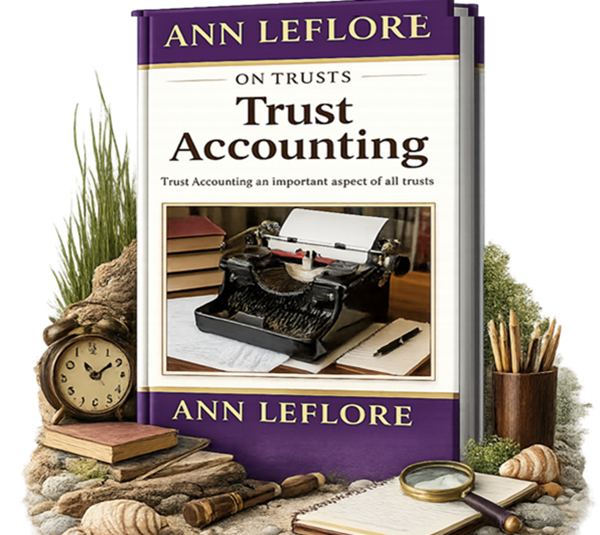






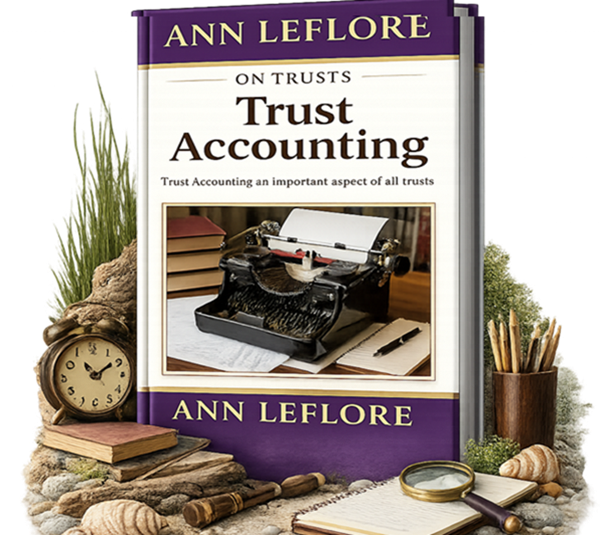
Trust Accounting
Trust Accounting: An Important Aspect of All Trusts
by Ann LeFlore
Take control of one of the most overlooked yet critical parts of trust management with a practical guide designed to help you properly track, record, organize, and manage your trust’s financial life.
This book introduces the essential systems behind trust accounting, including asset ledgers, chart of accounts, journal entries, banking records, beneficiary allocations, financial statements, tax reporting, and double-entry bookkeeping principles that help trustees maintain compliance, protect assets, and preserve trust integrity.
Whether your goal is tracking trust property, managing income and expenses, preparing for IRS reporting, protecting beneficiaries, or learning how to maintain accurate trust records, Ann LeFlore provides a structured foundation for running your trust finances with greater precision, organization, and confidence.
eBook: $49.95
What will you learn?
This guide gives readers a deeper look at how trust accounting works in real-world trust administration and why accurate financial management is essential to protecting trust assets, maintaining fiduciary compliance, and preserving trust legitimacy. It explains accounting systems, asset tracking, double-entry bookkeeping, ledgers, financial statements, beneficiary allocations, tax reporting, and the operational discipline required to properly manage a trust’s complete financial life.
- What trust accounting is and why it is essential to every trust
- How trust accounting protects trust assets, beneficiaries, and fiduciary integrity
- The difference between trust creation and trust financial management
- How double-entry bookkeeping applies to trust administration
- How debits, credits, and balancing principles function in trust accounting
- How to build and customize a trust chart of accounts
- How trust asset ledgers track property, vehicles, investments, cryptocurrency, gold, silver, and personal assets
- How Schedule A and Schedule B integrate with accounting systems
- How to establish and maintain an Asset Ledger
- How cost basis, adjusted basis, depreciation, valuation, and asset status affect trust records
- How to properly record trust funding, purchases, sales, distributions, and liabilities
- How journal entries and general ledger systems work
- How to manage trust cash receipts, expenses, and distribution journals
- How to track trust bank accounts, cash ledgers, and financial controls
- How bank reconciliation protects against accounting errors and trust mismanagement
- How liability ledgers track loans, payables, and obligations
- How income and expense ledgers support daily trust administration
- How beneficiary ledgers track allocations, distributions, and reporting obligations
- How to prepare trust balance sheets, income statements, and cash flow statements
- How trust accounting supports IRS Form 1041 and Schedule K-1 compliance
- How annual beneficiary accounting and reporting requirements function
- How to create audit-ready records and document retention systems
- How trustees avoid common accounting mistakes that trigger audits, penalties, or fiduciary disputes
- How to use spreadsheets, templates, ledgers, and practical accounting systems to run trust finances professionally
- How trust accounting strengthens legal defensibility, tax compliance, and long-term operational control.
Book Description
Trust Accounting by Ann LeFlore is a comprehensive financial management and operational guide for trustees, grantors, families, and trust administrators who want to properly manage the accounting systems that keep a trust legally compliant, financially organized, and operationally sound.
Designed as both an educational resource and practical accounting framework, this book teaches readers how to build, maintain, and oversee the complete financial infrastructure of a trust—from asset ledgers and charts of accounts to journal entries, bank reconciliation, beneficiary ledgers, financial statements, and tax reporting systems. Rather than focusing solely on legal trust creation, Trust Accounting addresses the real-world financial discipline required to operate a trust professionally.
Readers are guided through double-entry bookkeeping principles, asset inventory systems, trust funding records, income and expense tracking, property sales, liabilities, beneficiary distributions, IRS Form 1041 reporting, Schedule K-1 allocations, and audit-ready documentation procedures. The book also provides practical templates, accounting examples, spreadsheet structures, reporting frameworks, and operational systems designed to help trustees maintain precise records while protecting trust integrity.
Whether your goal is tracking trust property, managing financial transactions, preparing compliant reports, protecting beneficiaries, preserving fiduciary discipline, or learning how to run trust finances with clarity and control, Trust Accounting provides a structured roadmap for transforming trust finances into a professionally managed accounting system.
Book Details
Title: Trust Accounting
Author: Ann LeFlore
Format: Digital Download / Educational Guide
Category: Trust Accounting, Trust Administration, Fiduciary Management, Estate Planning, Financial Operations
Purpose: Educational and informational resource for understanding, organizing, tracking, and managing trust finances through proper accounting systems, double-entry bookkeeping, asset ledgers, financial reporting, tax compliance, and fiduciary recordkeeping
Focus Areas: Trust accounting systems, double-entry bookkeeping, asset ledgers, chart of accounts, journal entries, general ledgers, bank reconciliation, beneficiary allocations, trust funding, income and expense tracking, balance sheets, cash flow statements, IRS Form 1041, Schedule K-1, fiduciary compliance, and audit-ready trust financial management
Includes: Comprehensive trust accounting frameworks, asset ledger systems, chart of accounts templates, journal entry examples, bank and cash ledger systems, liability tracking, beneficiary accounting tools, financial statement templates, tax reporting systems, record retention procedures, spreadsheets, checklists, operational systems, and practical trust accounting resources
Ideal For: Trustees, grantors, co-trustees, successor trustees, estate planners, accountants, property owners, business owners, financial managers, legal researchers, and individuals seeking stronger trust financial management, fiduciary compliance, accounting precision, and long-term operational control
Delivery: Instant access upon purchase (if digital product)
Usage: Personal educational use
Table of Contents
- Copyright Notice
- Dedication
- Preface
- Foreword
- Legal Disclaimer
- Introduction to Trust Accounting
- Key Components of Trust Accounting
- Chart of Accounts
- General Ledger Entries
- Reports and Usage
- Next Steps
- Glossary of Trust Accounting Terms
- Chapter 1: The Asset Ledger – Inventory and Valuation of Trust Property
- 1.1 Definition and Purpose of the Asset Ledger
- 1.2 Relationship to Trust Schedules and General Ledger
- 1.3 Detailed Field Structure
- 1.4 Procedure for Establishing the Asset Ledger
- 1.5 Recording Specific Asset Types in the Asset Ledger
- 1.6 Updating the Ledger for All Changes
- 1.7 Simple Asset Ledger Example (6 Columns)
- 1.8 Integration with Financial Statements and Tax Reporting
- 1.9 Common Errors and Remediation in the Asset Ledger
- 1.10 Practical Assignment: Build and Update Your Asset Ledger
- Chapter 2: Chart of Accounts
- 2.1 What Is the Chart of Accounts?
- 2.2 How to Assign Account Numbers
- 2.3 Your Trust’s Chart of Accounts – Full Setup
- 2.4 Step-by-Step Setup of Your Chart of Accounts
- 2.5 Examples of Using the Chart of Accounts
- 2.6 Why Assign Numbers This Way
- Chapter 3: Cash Receipts and Distribution Journal
- 3.1 Why the Debit and Credit System Is Used
- 3.2 How the Debit and Credit System Works
- 3.3 How to Determine Which Accounts Are Debited and Which Credited
- Sample Journal Entries Transactions
- Chapter 4: Journal Ledgers
- 4.1 The Accounting Ledger – The Backbone of Effective Financial Management
- 4.2 What Is an Accounting Ledger?
- 4.3 Posting Process from Journal to Ledger
- 4.4 How Does an Accounting Ledger Work?
- 4.5 Double-Entry System and Ledger Posting
- 4.6 Best Practices for Managing Your Accounting Ledger
- 4.7 Common Challenges and How to Overcome Them
- 4.8 The Evolution of the Accounting Ledger
- Chapter 5: Trial Balance
- 5.1 Introduction to Understanding the Trial Balance in Trust Accounting
- 5.2 Objectives of Preparing the Trial Balance
- 5.3 Limitations of the Trial Balance
- 5.4 Methods of Preparing the Trial Balance
- 5.5 Adjusted Trial Balance Using a Suspense Account
- 5.6 Rules for Preparing the Trial Balance
- 5.7 Summary of the Trial Balance
- Chapter 6: Bank Ledger
- 6.1 Bank Account Ledger: Tracking Every Dollar
- 6.2 What Is a Bank Account Ledger?
- 6.3 How Does a Bank Account Ledger Work?
- 6.4 Bank Ledger Format and Importance
- 6.5 How to Prepare a Bank Account Ledger
- 6.6 Relationship to Other Trust Ledgers
- Chapter 7: Cash Ledger
- 7.1 The Cash Account Ledger in Trust Accounting
- 7.2 What Is a Cash Account Ledger?
- 7.3 Types of Cash Account Ledgers
- 7.4 Benefits of the Cash Account Ledger
- Chapter 8: Bank Account Reconciliation
- 8.1 Bank Reconciliation Statement with Problem and Solution
- 8.2 Common Problems in Bank Reconciliation
- 8.3 Step-by-Step Preparation of Bank Reconciliation
- 8.4 Practical Trust Example
- 8.5 Tips for Effective Bank Reconciliation
- 8.6 Bank Reconciliation Q&A
- Chapter 9: Liability Ledger
- 9.1 Definition of Liability Account in Trust Accounting
- 9.2 How to Find Liabilities
- 9.3 Examples of Liabilities
- 9.4 How to Calculate Liabilities
- 9.5 Importance of Liabilities in Protecting Trust Assets
- Chapter 10: Income and Expense Ledgers
- 10.1 The Income Ledger
- 10.2 The Expense Ledger
- 10.3 Definition and Purpose
- 10.4 Who Must Maintain the Income and Expense Ledger
- 10.5 Rules and Tips for Maintenance
- 10.6 Step-by-Step Income Ledger Instructions
- Chapter 11: Beneficiary Ledger
- 11.1 Introduction to Beneficial Interest
- 11.2 The Beneficiary Ledger
- 11.3 Beneficiary Accounting in Trust Management
- Chapter 12: Balance Sheet
- 12.1 What Is a Balance Sheet?
- 12.2 Understanding the Basics
- 12.3 Definition and Purpose
- 12.4 Key Components
- 12.5 Structure of a Balance Sheet
- 12.6 Reading and Interpreting a Balance Sheet
- 12.7 The Role of a Balance Sheet in Trust Financial Planning
- 12.8 Balance Sheets vs. Other Financial Statements
- Chapter 13: Income Statement
- 13.1 What Is an Income Statement?
- 13.2 Income Statement vs. Other Financial Statements
- 13.3 Key Information on the Income Statement
- 13.4 How an Income Statement Works
- 13.5 Main Components
- 13.6 Reading and Evaluating an Income Statement
- 13.7 Importance of the Income Statement
- 13.8 Conclusion on the Income Statement
- Chapter 14: Cash Flow Statement
- 14.1 Understanding the Cash Flow Statement
- 14.2 What Is a Cash Flow Statement?
- 14.3 Components of a Cash Flow Statement
- 14.4 Importance of the Cash Flow Statement
- 14.5 How to Prepare a Cash Flow Statement
- 14.6 Analyzing the Cash Flow Statement
- 14.7 Common Issues in Cash Flow Statements
- 14.8 The Role of the Cash Flow Statement in Trust Financial Planning
- Chapter 15: Tax Reports
- 15.1 Overview of Trust Taxation
- 15.2 Detailed Taxation Process of Distributed Income
- 15.3 Key Differences Between Distributed and Retained Income
- Chapter 16: Annual Accounting for Beneficiaries
- Sample Annual Accounting Report for Beneficiaries
- 16.1 Administering a Trust – Annual Accounting
- 16.2 Obtaining Beneficiary Assents
- 16.3 Duty to Provide Accounting
- 16.4 Consequences of Failing Legal Obligations
- 16.5 Challenges and Common Pitfalls
- Chapter 17: Record Retention List
- 17.1 How Long Must Trust Records Be Kept?
- 17.2 Understanding Record Keeping
- 17.3 General Principles of Record Retention
- 17.4 Specific Retention Periods
- 17.5 Key Trust Records to Maintain
- 17.6 Methods for Secure Record Keeping
- Appendix: Double-Entry Accounting – The Complete System for Trusts
- Understanding Debits and Credits in Trust Accounting
- Index
About the Author

eBook: $49.95
Ann LeFlore is an author and educational resource creator focused on trust organization, estate structure, and private trust frameworks. Through her work, she provides practical tools, instructional materials, and trust-based educational resources designed to help individuals and families better understand the process of creating, funding, organizing, and managing trust structures with greater clarity.
Her work emphasizes accessible trust education, structured planning, and practical guidance, offering readers step-by-step resources, templates, and organizational frameworks intended to simplify complex trust concepts. Through her books and educational materials, Ann LeFlore’s mission is to help readers move forward with greater confidence, organization, and understanding in their trust planning journey.